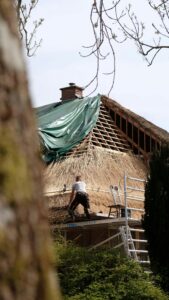
The short answer to does homeowners insurance cover roof replacement is: sometimes. A standard homeowners policy pays to repair or replace a roof when it is damaged suddenly and accidentally by a covered peril — wind, hail, fire, or a falling tree, for example. It does not pay to replace a roof simply because the roof is old, worn out, or overdue for maintenance. Everything after that depends on the wording of your policy, your deductible, and how your roof is insured. Coverage varies by policy, insurer, and state, so the details below are general guidance — always read your own declarations page and policy form before you assume you are covered.
When Homeowners Insurance Covers Roof Replacement
Homeowners insurance is built around one idea: it covers losses that are sudden and accidental. If a specific, named event damages your roof, your policy will generally pay to repair the damaged portion — and, if the damage is extensive enough, to replace the roof. The standard list of covered perils includes the situations below.
- Wind and windstorms. High winds that tear off shingles, lift flashing, or peel back sections of the roof are typically covered. This is one of the most common roof claims in the United States.
- Hail. Hail that bruises shingles, knocks granules loose, or dents metal components is a covered peril. Hail damage is often subtle at first but shortens a roof’s life significantly.
- Fire and lightning. Fire damage is covered, including damage a lightning strike does to the roof structure and the resulting interior water damage.
- Falling objects and trees. A tree limb or other object that falls onto the roof and damages the structure is covered, provided the building itself was struck.
- Weight of ice, snow, or sleet. Roof damage caused by an unusual accumulation of ice or snow is generally covered.
- Storm-related water intrusion. If wind or hail first opens a hole in the roof and rain then enters, the resulting interior water damage is typically covered. The key is that a covered peril created the opening.
Two important caveats apply. First, coverage is for the damage that the covered event caused — not for pre-existing problems. If hail hits a roof that was already failing from age, the insurer may cover only part of the loss, or none of it. Second, flood and earthquake are not covered by a standard homeowners policy. Wind and hail are also excluded outright on some policies, particularly in coastal or hail-prone regions, so check your policy for any wind or hail exclusion before you need it.
When Homeowners Insurance Does NOT Cover Roof Replacement
The most common reason a roof claim is denied is not the event — it is the age and condition of the roof. Homeowners insurance is not a maintenance plan, and insurers will not pay for what they consider your responsibility as the homeowner.
- Age and normal wear and tear. Shingles, flashing, and underlayment all degrade over time. When a roof reaches the end of its service life and simply fails, replacement is on you.
- Neglect and poor maintenance. A roof that was left to deteriorate — missing shingles left unrepaired, gutters clogged for years, leaks ignored — will not be covered. If poor maintenance allowed the damage to happen, the claim can be denied even when a storm is involved.
- Gradual leaks. A slow leak that develops over months or years is a maintenance issue, not a covered peril. Only sudden water damage from a covered event qualifies.
- Manufacturer or installation defects. A defective shingle or poor workmanship is a warranty matter between you, the manufacturer, and the installer — not an insurance claim.
- Flood and earthquake. These require separate policies and are excluded from a standard homeowners policy.
Roof age also shapes how insurers treat you before a claim ever happens. Many insurers require a roof over roughly 20 years old to pass an inspection before they will insure the home, and they may limit an older roof to actual cash value coverage — which pays far less — or exclude the roof from certain perils. Replacing an aging roof proactively, before it fails, often costs less in the long run than waiting for a denial.
Actual Cash Value (ACV) vs. Replacement Cost Value (RCV)
When your roof claim is approved, the settlement is calculated on one of two bases, and the difference between them is the single biggest factor in how much money you actually receive. This is worth checking on your declarations page today, before you need it.
| Factor | Actual Cash Value (ACV) | Replacement Cost Value (RCV) |
|---|---|---|
| What it pays | The roof’s depreciated value — replacement cost minus depreciation for age and condition | The full cost to repair or replace the roof with materials of similar kind and quality |
| Depreciation | Deducted from your payout | Not deducted |
| Out-of-pocket cost | Higher — you absorb the depreciation yourself | Lower — you pay only your deductible |
| Payout structure | One check, minus depreciation and deductible | Two checks: ACV first, then held-back “recoverable depreciation” once work is complete |
| Typical trade-off | Lower premiums, smaller payouts | Higher premiums, fuller payouts |
With an RCV policy, the insurer typically pays in two installments. The first check covers the roof’s actual cash value, minus your deductible. Once you complete the repairs and submit the final invoice, the insurer releases the second check — the recoverable depreciation it held back. If you never finish the work, you never collect that second amount. With an ACV-only policy, there is no second check: the depreciation is simply gone, and on an older roof that can consume half the payout or more.
This distinction matters more now than it used to. Many insurers have shifted older roofs from replacement cost to actual cash value coverage in recent years, sometimes silently at renewal. Regulators in several states warn homeowners to check their roof coverage every time the policy renews. Read the declarations page and look specifically for how the roof — not the whole dwelling — is settled, because a policy can carry RCV on the house while settling the roof at ACV.
How Roof Deductibles Work
Your deductible is the amount you pay before your insurer pays anything, and on a roof claim it is often not the number you think it is. Standard deductibles are a flat dollar amount. But many policies add a separate, higher deductible that applies specifically to wind, hail, or named storms — and that separate deductible is commonly written as a percentage of your dwelling coverage, not a flat fee.
A percentage wind or hail deductible is typically set between 1% and 5% of your home’s insured value. Because it is calculated against the full value of the house, it can be far larger than a flat deductible — often large enough that a modest repair falls entirely below it, meaning insurance pays nothing. In hail- and wind-prone states, this is now the norm rather than the exception, and many homeowners with roof damage never file at all because their deductible exceeds the repair cost.
Two rules follow from this. First, know your deductible type before a storm — look on the declarations page for a separately stated wind, hail, or hurricane deductible. Second, compare the likely repair cost to your deductible before filing. If the damage is minor and the repair lands at or below your deductible, paying out of pocket is usually the better move, because a filed claim still goes on your insurance record whether or not it pays out.
How to File a Roof Insurance Claim
A well-documented claim is far more likely to be paid than a rushed one. The process below reflects what most insurers and state regulators recommend.
1. Document the damage immediately
Photograph and video every damaged area before you clean up or make repairs — roof slopes from multiple angles, gutters, downspouts, flashing, vents, and any interior water stains. Note the date of the event. Clear documentation ties the damage to a specific, verifiable event, which is what separates a covered loss from a maintenance issue.
2. Make temporary repairs only
Your policy requires you to prevent further damage, so tarp the hole and board up openings, and save the receipts — reasonable temporary repairs are usually reimbursable. Do not make permanent repairs or tear off the roof before the adjuster has seen the damage, or you risk forfeiting the evidence your claim depends on.
3. Get an independent inspection
Have a licensed roofer inspect the roof and write an itemized estimate. Having your own professional assessment — separate from the insurer’s — gives you a benchmark to compare against the adjuster’s scope. See our roof repair cost guide for what a fair repair estimate should look like, and our roof replacement cost guide if the damage warrants full replacement.
4. Review your policy before you call
Confirm your deductible type, whether the roof is settled at RCV or ACV, your notice deadline, and any cosmetic or matching exclusions. Knowing the language before you file lets you anticipate how the adjuster will frame the claim.
5. File promptly and work with the adjuster
Report the loss as soon as reasonably possible — most policies require prompt notice, and some states set hard deadlines for storm claims. When the adjuster is assigned, be on site for the inspection and point out every area of damage. Having your contractor present is the single most useful step you can take.
6. Review the estimate and complete the work
Read the adjuster’s scope line by line against your contractor’s estimate. If scope is missing, your contractor can submit a supplement. Once you complete the repairs, submit the final invoice and completion photos to release any held-back recoverable depreciation.
Tips to Improve Your Claim Approval Odds
- Maintain the roof and keep records. A documented maintenance history — inspection reports, repair receipts, and photos over time — counters the most common denial, which is neglect or wear and tear.
- Act fast after the storm. Tie the damage to a dated weather event, and report it promptly. Late notice gives an insurer a contractual defense even on an otherwise valid claim.
- Know RCV vs. ACV before you need it. If your roof is settled at ACV, you are self-insuring a large share of the loss. Consider upgrading to RCV coverage on the roof if your insurer offers it.
- Have your contractor meet the adjuster. A professional who can speak the adjuster’s language and point out storm-specific damage measurably improves the outcome.
- Don’t file for wear and tear or minor damage. A claim that is denied or below your deductible pays nothing and still lands on your claims history.
- Never accept a contractor who offers to “waive your deductible.” In most states this is insurance fraud, and it can implicate you as well as the roofer.
FAQ
Does homeowners insurance cover a roof that’s just old?
No. Age and normal wear and tear are the homeowner’s responsibility, not an insured peril. Insurance covers sudden, accidental damage from a covered event — it does not cover a roof that simply reached the end of its service life.
Will insurance replace my whole roof if only part is damaged?
Not necessarily. Most policies pay to repair the damaged portion, and a full replacement is covered only when the damage is extensive enough to justify it. If part of the damage is age-related, the insurer may pay for only the storm-related portion.
What’s the difference between replacement cost and actual cash value on a roof?
Replacement cost value (RCV) pays the full cost to repair or replace the roof without deducting for depreciation. Actual cash value (ACV) deducts depreciation for the roof’s age and condition, so the payout shrinks as the roof gets older. RCV pays in two checks, with the held-back depreciation released after the work is done; ACV pays once, with no second check.
Does homeowners insurance cover roof leaks?
It depends on the cause. A leak caused by a sudden covered event — wind or hail tearing shingles loose and letting rain in — is generally covered, including the interior damage. A slow, gradual leak from aging or neglected flashing is a maintenance issue and is typically not covered.
Will filing a roof claim raise my premiums?
It can. Claims stay on your insurance record for several years and can affect your rates or insurability, even a claim that pays little. For damage at or below your deductible, paying out of pocket is often the smarter long-term move.
The Bottom Line
Homeowners insurance covers roof replacement when a sudden, covered peril — wind, hail, fire, or a falling tree — damages the roof, and it does not cover roofs that fail from age, wear, or neglect. Your payout then depends on two things you control at renewal time: whether the roof is settled at replacement cost or actual cash value, and how your deductible is structured. Read your declarations page now, maintain the roof and document it, and act quickly if a storm hits. Coverage varies by policy and state, so when in doubt, ask your agent or insurer to explain exactly how your roof is covered — before you need to file a claim.